
THE QUICK ANSWER
What to settle first.
From a safe position, describe where moisture appears, which fixture was in use and whether the cabinet is wet when the sink is idle. Ask which visible connections and concealed paths the assessment includes. Do not run repeated tests or remove fittings to reproduce the problem.
AT A GLANCE
Three points to clarify.
Timing
Keep the first visible moisture time separate from the assumed start.
Connections
Describe accessible fittings without dismantling them.
Finish repair
Clarify who handles wet materials and cabinet restoration.
01 / PLAN THE CONVERSATION
Make the timing useful
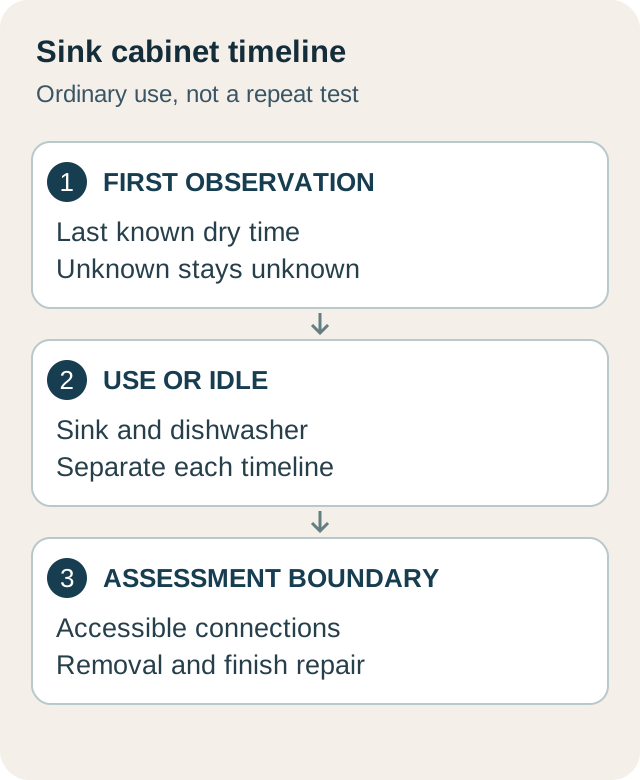
A wet cabinet discovered after dishes does not prove the drain is leaking. Water might have been noticed only then, and more than one connection can be present. Record the first observation, the last known dry observation if you have one, and the ordinary sink or appliance use around that time. An unknown start time should remain unknown.
In a Lexington kitchen, distinguish a sink observation from nearby dishwasher use rather than labeling everything an under-sink leak. Do not run another cycle to test your theory. A short timeline helps the business plan an assessment while leaving the cause open.
02 / PLAN THE CONVERSATION
Describe access before authorizing removal
List safely visible connection locations and whether stored items or a fixed shelf obscure them. A photograph from outside the cabinet can describe access. Do not reach into water near electrical outlets, move powered equipment or undo supply and drain fittings. EPA advises examining fittings for surface water; that observation is different from proving a concealed failure.
Ask whether the initial assessment can use existing access. If opening a cabinet or wall is proposed, request the purpose, extent and approval point before work starts. Agree separately on who restores finishes afterward. Removing an obstruction for diagnosis and rebuilding the cabinet are different tasks and may belong to different businesses.
Call for Quote(832) 852-025603 / PLAN THE CONVERSATION
Use the findings to separate the jobs
Use the leak repair overview to ask what confirmed finding supports the work. Keep source repair, assessment of wet materials and finish restoration on separate lines. A dry cabinet surface after the plumbing repair does not establish that every adjacent material has been assessed.
Retain the observation timeline and the written repair findings together. If water reappears, record whether it happens during normal use or while the fixture is idle, and report it to the business handling follow-up. Do not assume that a return symptom proves the earlier repair was wrong or that a new larger job is necessary.
YOUR DECISION WORKSHEET
Sink-cabinet observation record
| Record | Keep this detail | Question to settle |
|---|---|---|
| Ordinary sink use | Use time and first observation | What connection needs assessment? |
| Idle cabinet | Observed moisture without new testing | What source remains possible? |
| Restricted access | Visible shelf or finish boundary | What removal needs prior approval? |
YOUR DISCUSSION CHECKLIST
Turn the conversation into clear answers.
Check an item once you have a recorded answer. These checks organize the conversation; they do not certify the design or work.
CALL-PREPARATION TOOL
Know what to say when you call.
Build a short outline from what you know. This does not submit a request or book service.
Your call notes
Questions to ask: Keep sink and dishwasher observations on separate lines. Leave unknown start times marked unknown. Describe safe access and any wet electrical area. Please confirm whether you handle the observed plumbing problem and assessment scope I describe and serve my address, plus any assessment fees and exclusions.
Common questions
Does water under a sink prove a drain leak?
No. The location does not identify the failed connection or water path. A qualified assessment should explain the finding before the repair scope is agreed.
Can the cabinet be rebuilt in the same plumbing scope?
Ask directly. Plumbing, material assessment and finish restoration are separate tasks unless the written agreement expressly includes them.
Sources and further reading
EPA WaterSense: household leak observationsQUESTIONS ABOUT PLUMBING?